
Aluminium
pallets
Explore the standard pallet from deck to base, then find the right structure for your load.
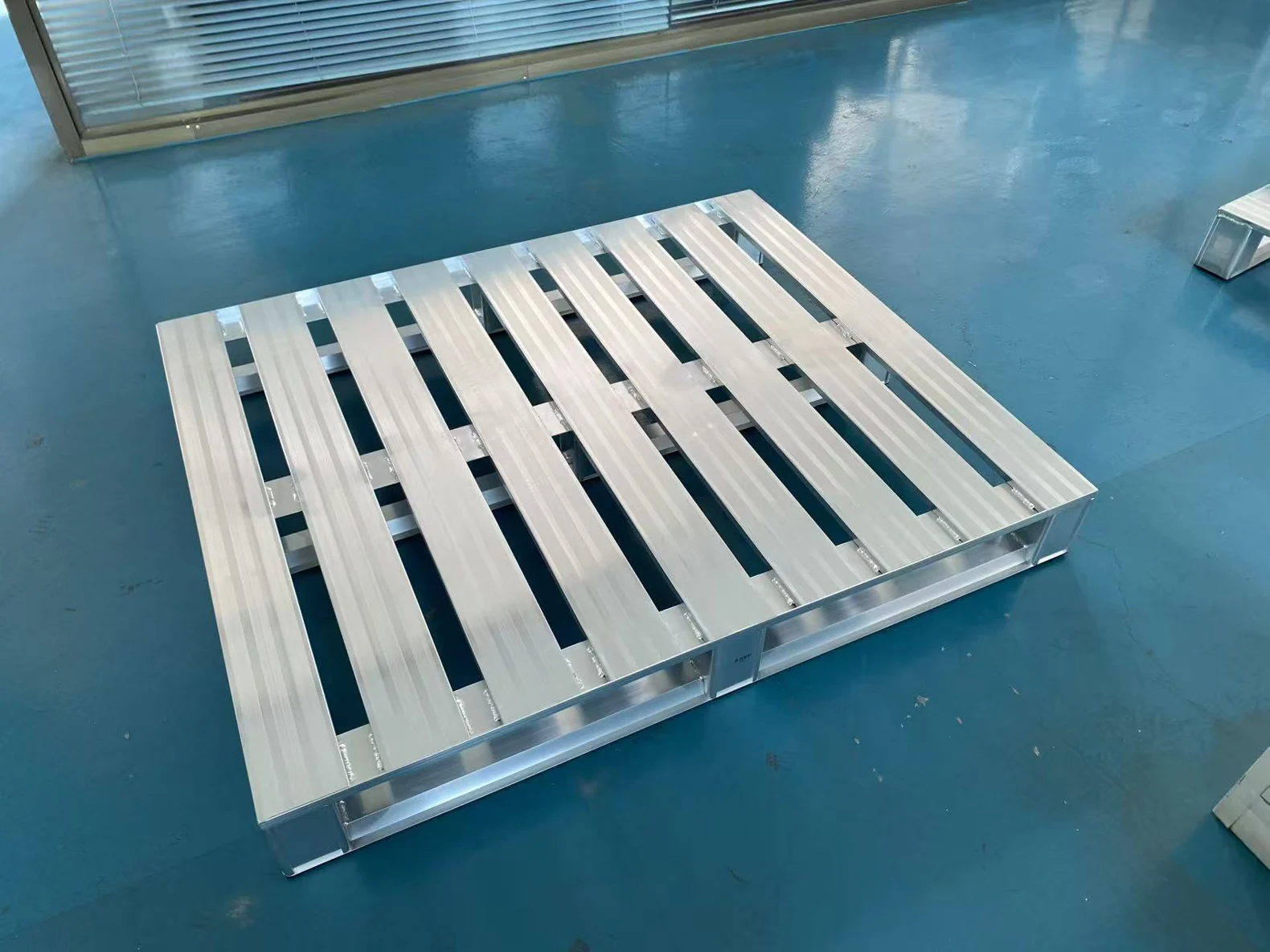
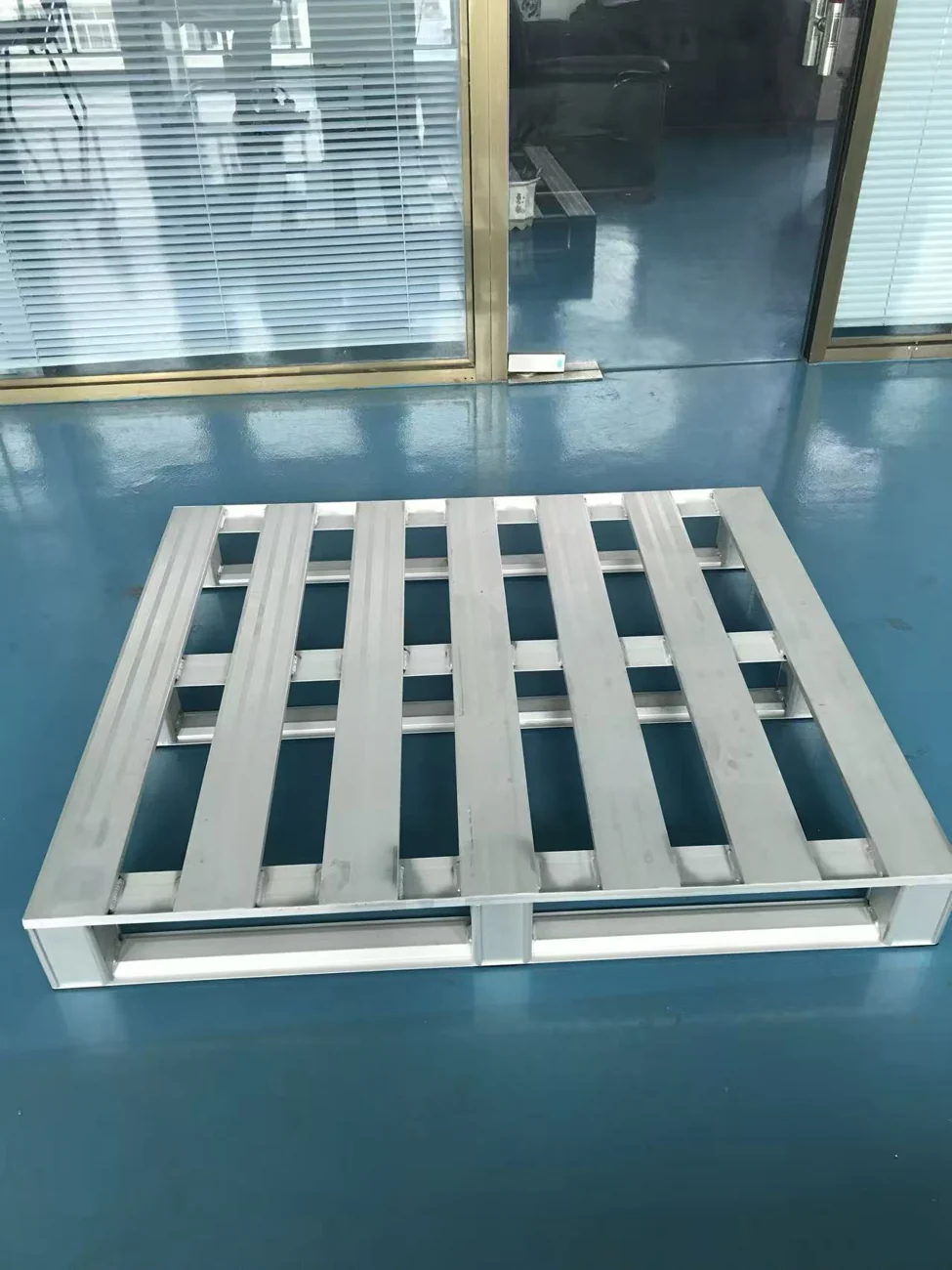
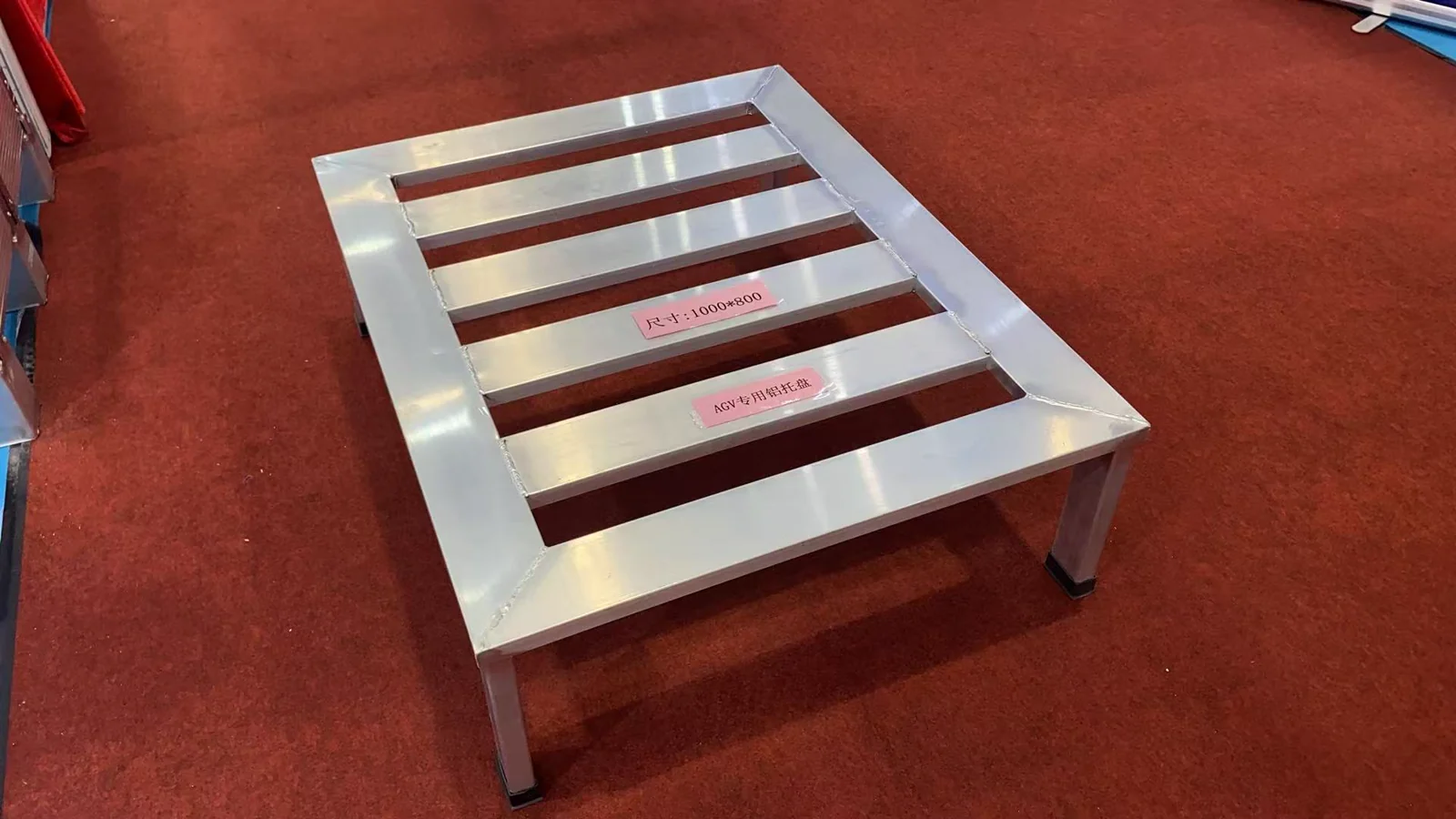
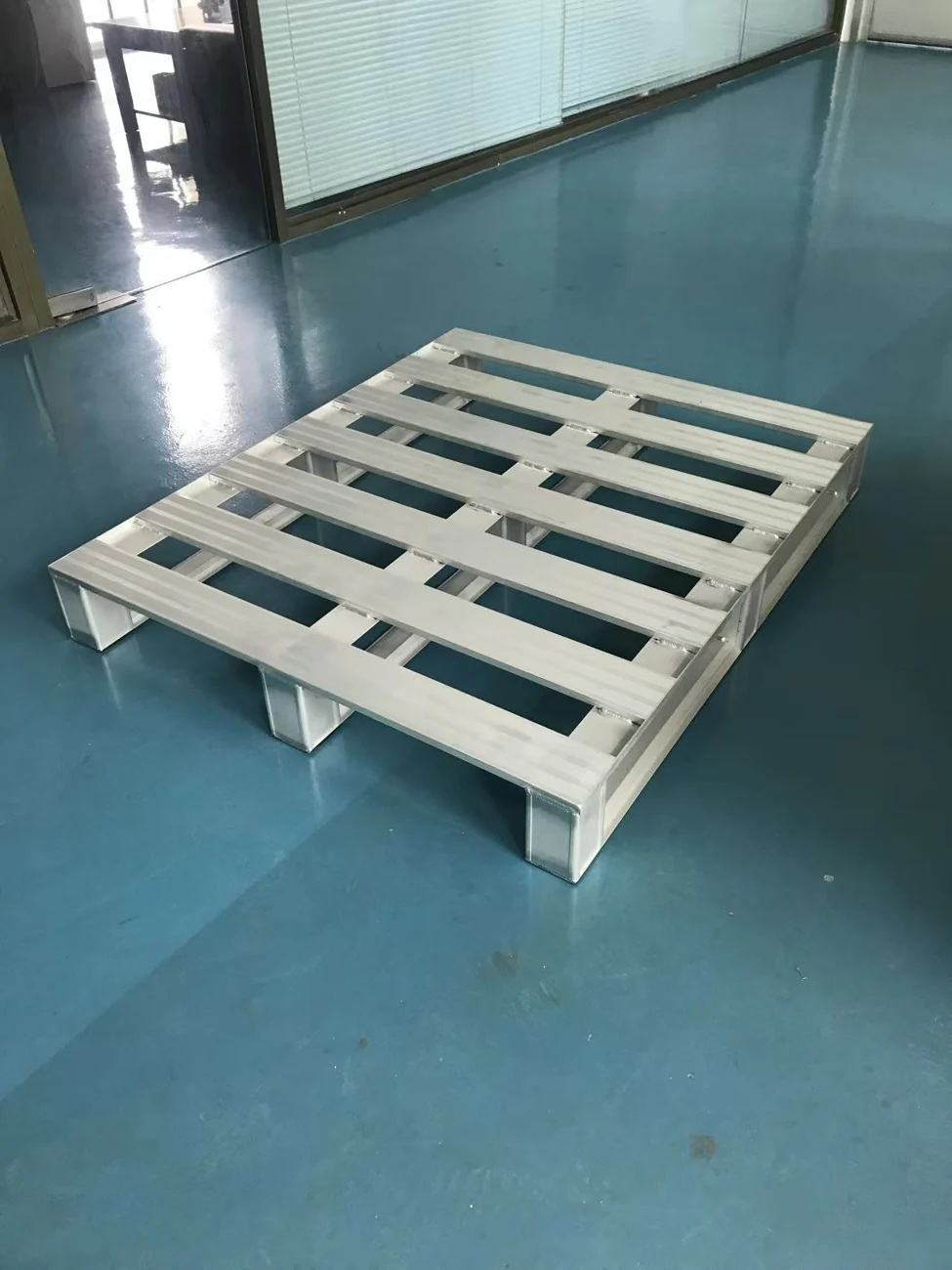
Slatted deck
Parallel aluminium slats support the load. Check that the base of the goods spans the gaps between them.
Fork openings
Two front openings receive the forks beneath the deck. Check fork thickness, width and spacing.
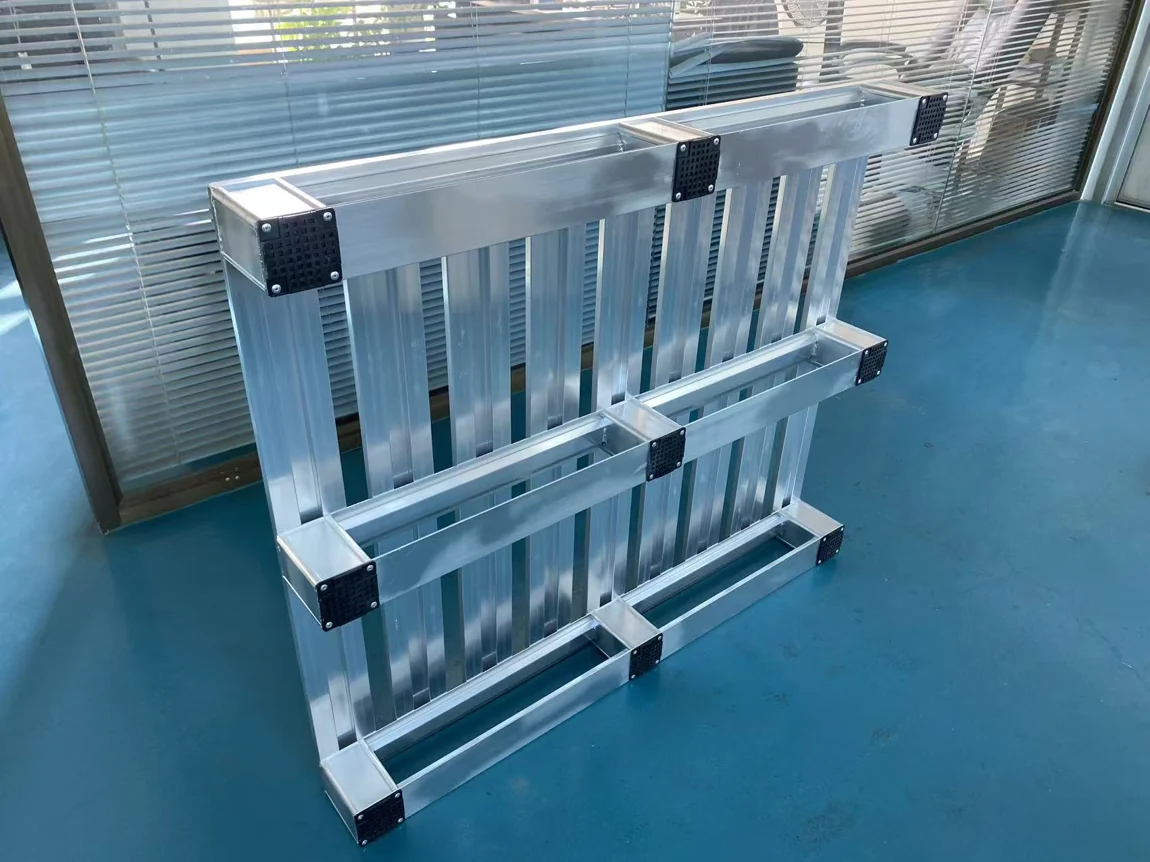
Side supports
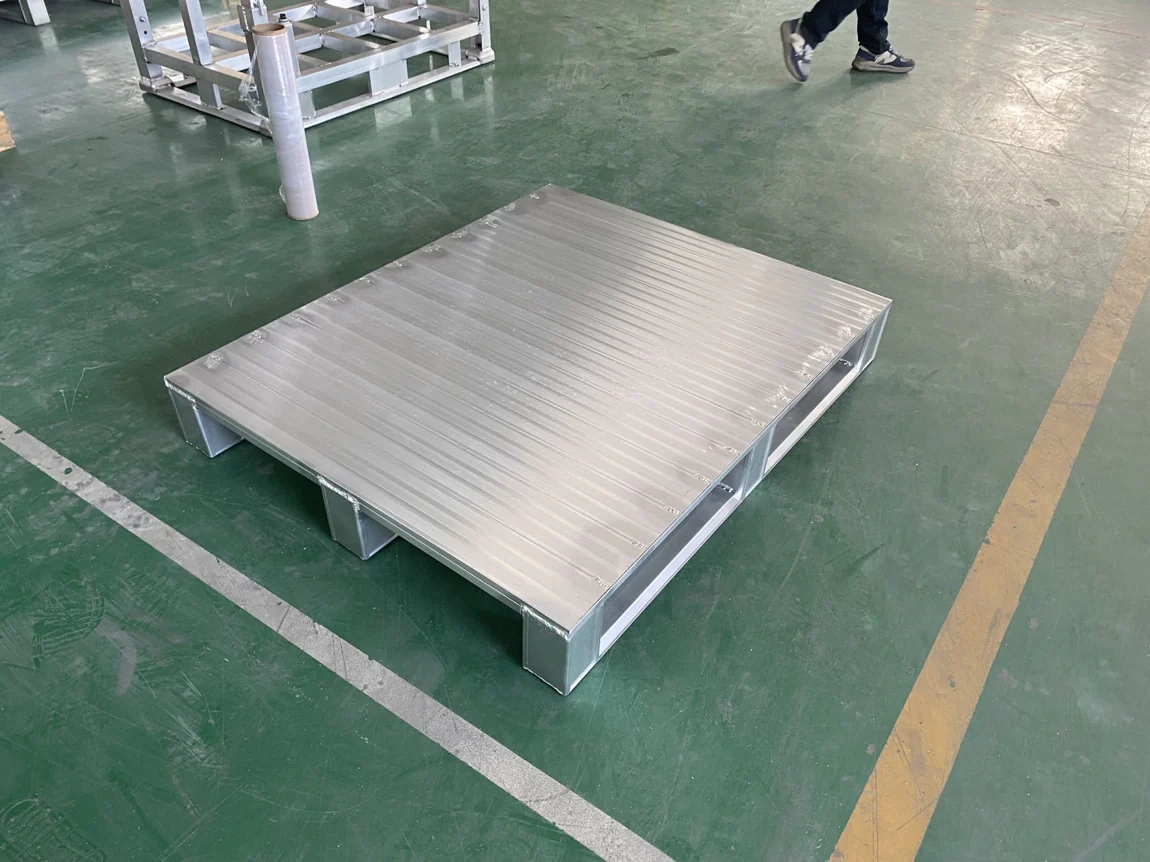
Seen from the side, the feet raise the deck above the floor. The three C models in the catalogue use interlocking, welded construction and allow four-way fork entry.
Underside
Three runners support the pallet on the floor. View the underside to compare their direction and contact points with your conveyor or rack supports.
Folded edges
Follow the narrow aluminium strip above the fork openings. It runs across the slat ends and turns back at the edge. Rotate the corner to see the lip catch the light. A matching strip finishes the opposite end.
- Standard range material
- High-strength aluminium alloy
Choose by structure
Full catalogue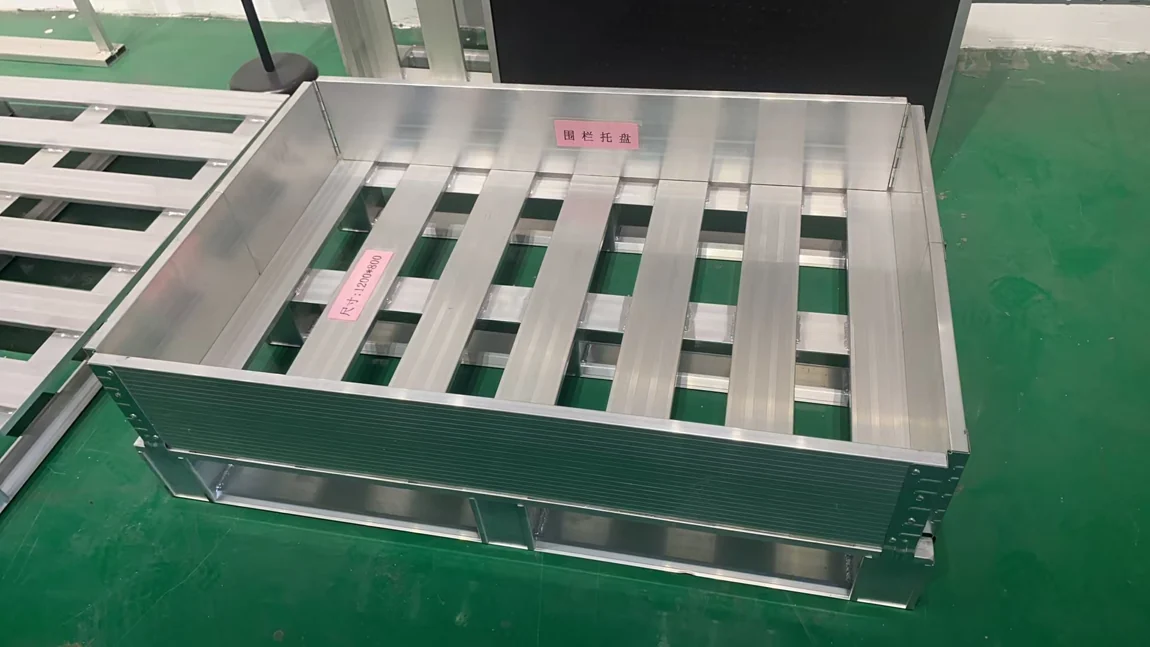
Why choose aluminium pallets?
- Lower tare weight
- The standard 80C weighs 10.5 kg empty, the 100C 11.8 kg and the 110C 12 kg. Use the figure for your model to calculate the weight of a return shipment.
- Fork access on four sides
- Forks can enter all three C models from four directions, so a driver can approach from whichever side is accessible at the dock or storage bay.
- Reuse and recovery
- Return empty pallets for the next handling cycle. At the end of a pallet’s service life, the aluminium can be collected for recycling.
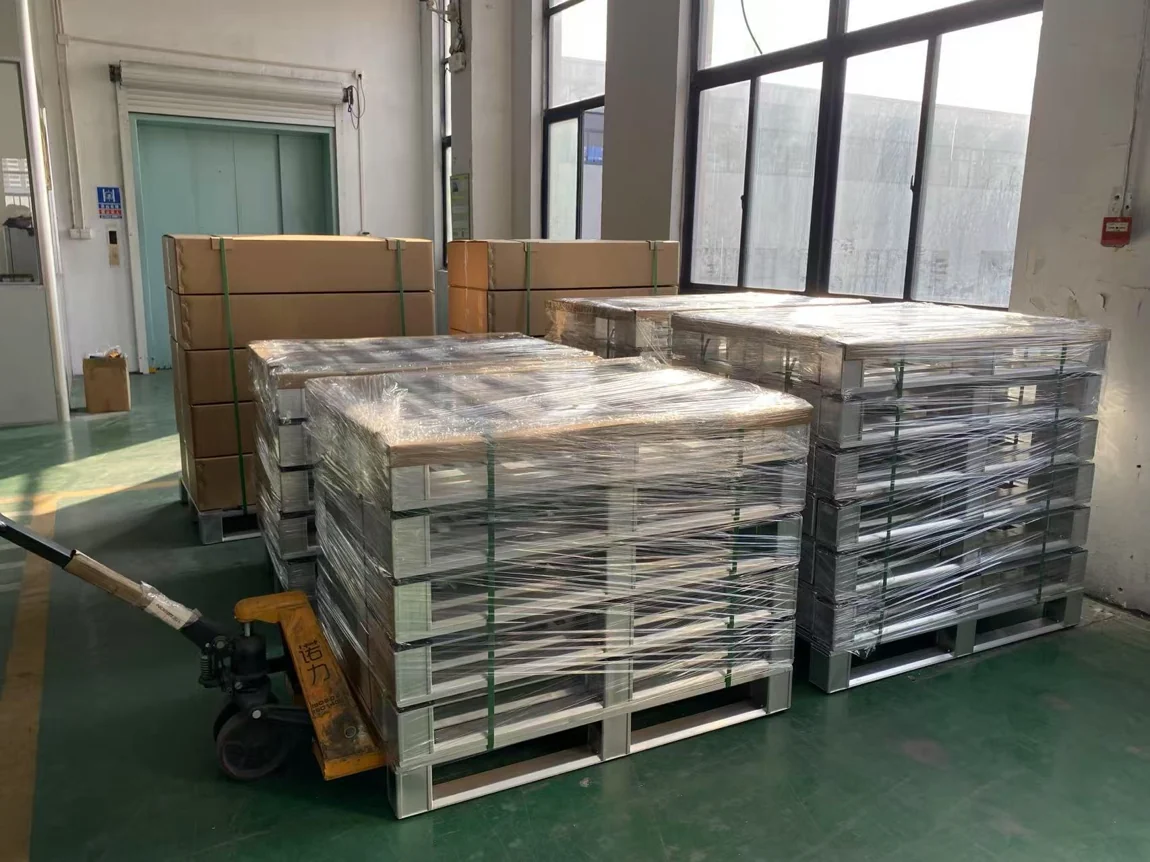
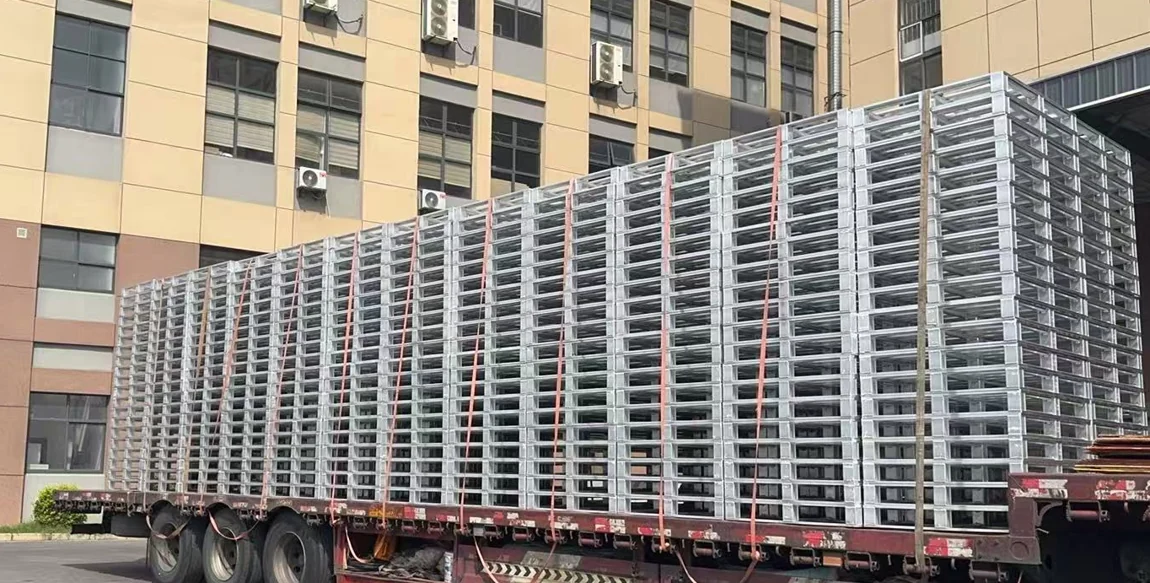
From workshop to dispatch
About Zhengting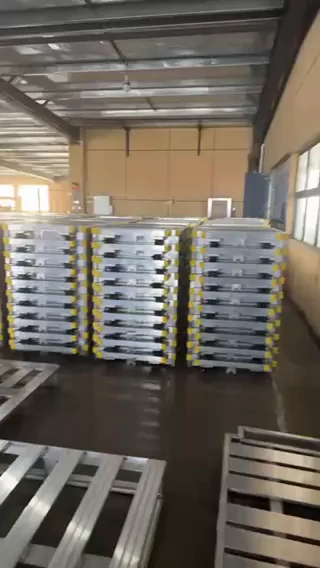
Discuss your pallet requirements
Start with the load dimensions, quantity and intended use.